
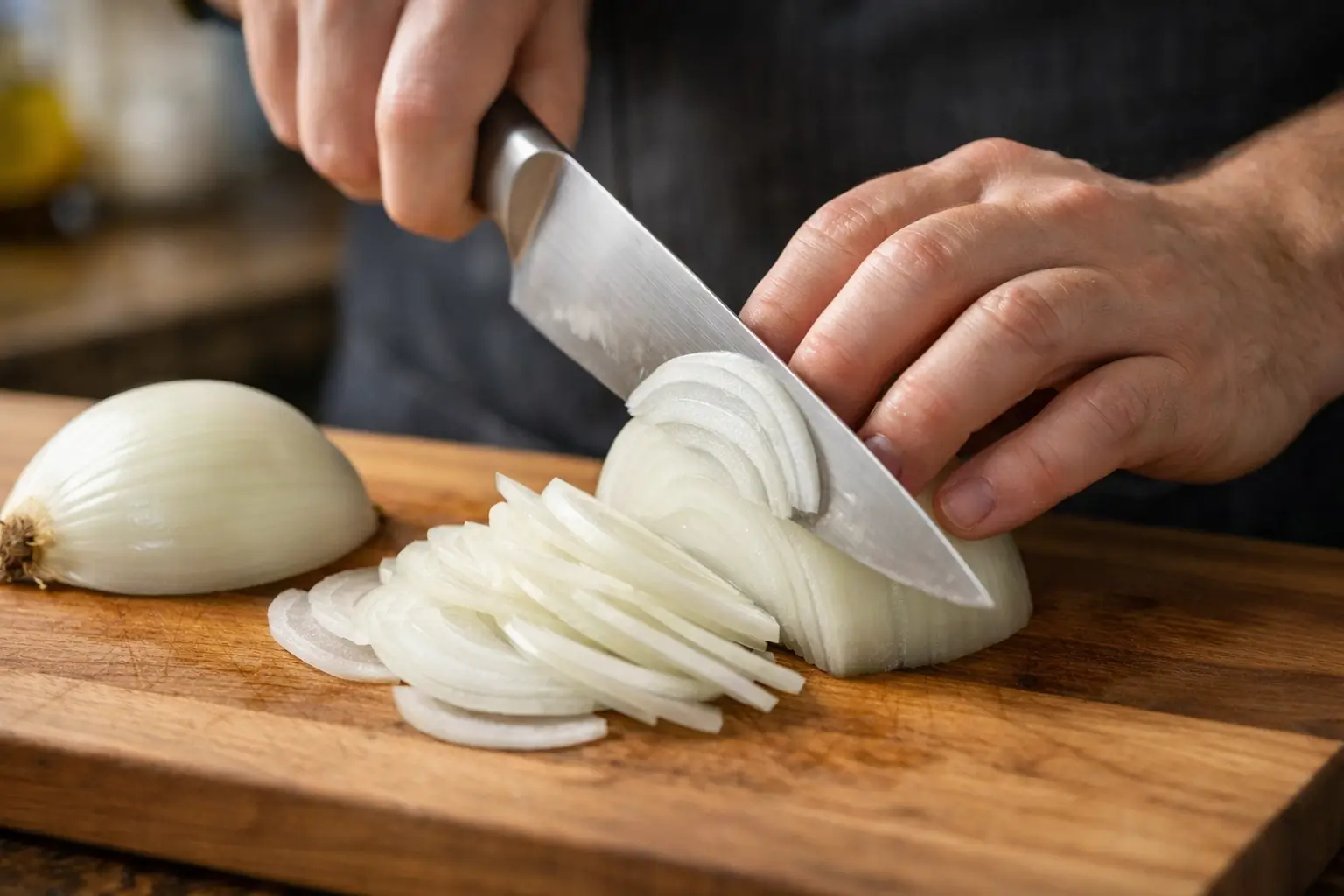
Mastering how to thinly slice an onion is one of those foundational kitchen skills that instantly elevates your cooking. Whether you are preparing a crisp salad, building layers of flavor in a stir fry, or topping a gourmet sandwich, the way you cut an onion directly impacts both texture and taste. Thin, even slices cook more consistently, blend seamlessly into dishes, and create a more refined presentation.
Why Learning How to Thinly Slice an Onion Matters
At first glance, slicing an onion may seem simple, but there is a noticeable difference between rough cuts and precise, paper thin slices. Thinly sliced onions soften faster, caramelize more evenly, and distribute flavor without overpowering a dish. This is especially important in recipes where balance is key, such as tacos, pasta, and fresh salads.
Uniformity also plays a critical role. When slices are consistent in thickness, they cook at the same rate. This prevents some pieces from burning while others remain undercooked. For home cooks aiming to improve their skills, learning how to thinly slice an onion is a small adjustment that delivers big results.
Common Mistakes Beginners Make
Many people struggle with uneven slices, slipping knives, or watery eyes that make the process frustrating. One of the most common issues is cutting too quickly without proper technique. This often leads to thick, irregular pieces rather than delicate slices.
Another mistake is using the wrong knife or a dull blade. A sharp knife glides through the onion with minimal resistance, giving you better control and cleaner cuts. Without it, the onion can crush instead of slice, affecting both texture and appearance.
Positioning is also frequently overlooked. Holding the onion incorrectly or not stabilizing it on the cutting board can make thin slicing difficult and unsafe. Proper hand placement is just as important as the knife itself.
What You Will Learn in This Guide
This comprehensive guide breaks down exactly how to thinly slice an onion step by step, using simple techniques that anyone can master. You will learn how to prepare the onion, choose the right tools, and apply professional methods used in real kitchens.
In addition, this article will cover practical tips to reduce tears, improve speed, and maintain consistency. By the end, you will feel confident slicing onions quickly and precisely for any recipe.
Learning how to thinly slice an onion is not just about technique. It is about building confidence in the kitchen and improving every dish you prepare from this point forward.
Want perfectly thin, even onion strips that elevate your cooking and presentation? Discover the proper technique and tips in this guide how to julienne an onion the right way.
Essential Tools for How to Thinly Slice an Onion
Before diving into technique, having the right tools makes a noticeable difference when learning how to thinly slice an onion. While skill improves over time, proper equipment ensures better control, cleaner cuts, and a safer cooking experience.
Choosing the Right Knife for Thin Onion Slices
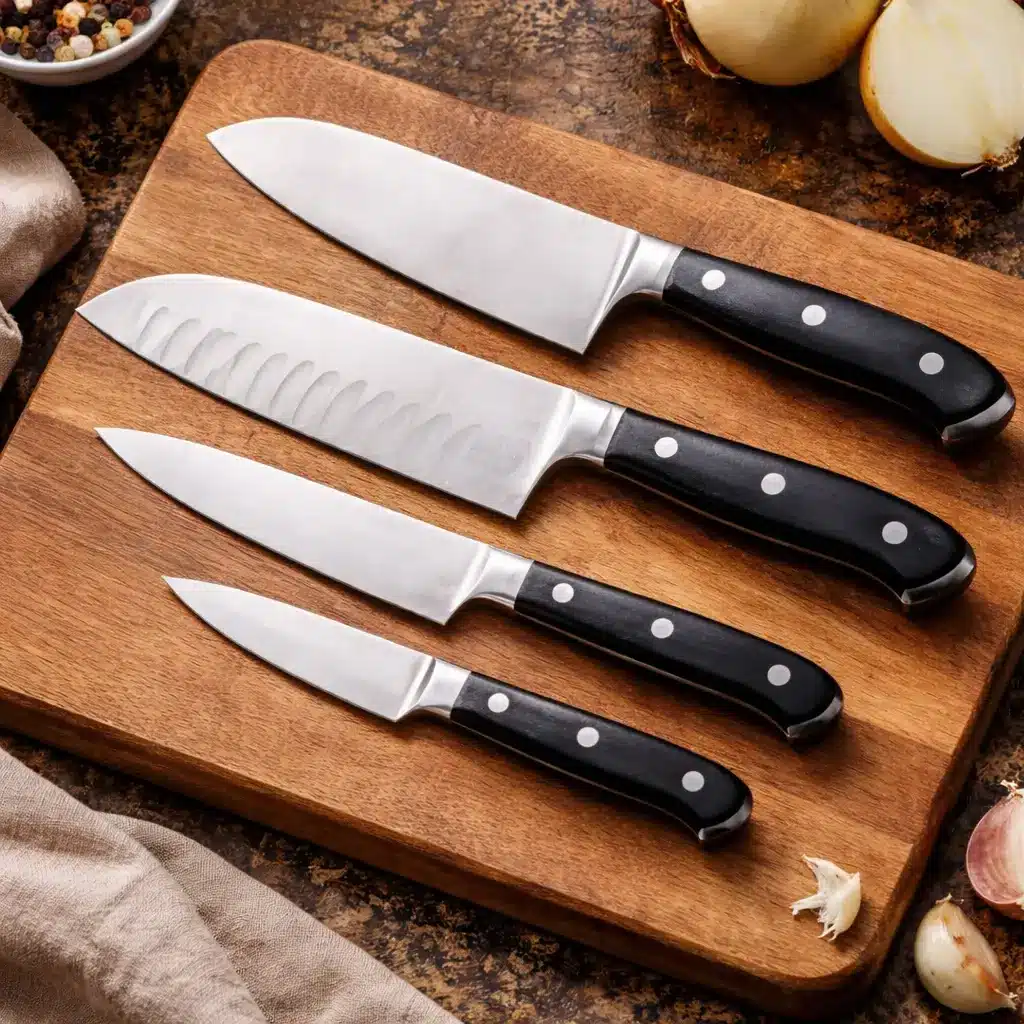
A sharp knife is the most important tool in this process. When considering how to thinly slice an onion, the type of blade you use directly affects precision and ease.
A chef’s knife is the top choice for most home cooks. Its broad blade and curved edge allow smooth, controlled slicing motions. The weight of the knife also helps guide cuts without requiring excessive force.
A santoku knife is another excellent option. It is slightly shorter with a straighter edge, which some people find easier for making uniform, thin slices. Both knives can achieve excellent results as long as they are properly sharpened.
Dull knives should be avoided at all costs. Instead of slicing cleanly, they crush the onion layers, releasing more irritating compounds and making the process harder and less precise.
The Importance of a Stable Cutting Board
A stable cutting surface is essential when practicing how to thinly slice an onion. Movement during slicing increases the risk of uneven cuts and accidents.
Wooden and high quality plastic cutting boards are ideal choices. They provide enough grip to keep the onion steady while also being gentle on your knife blade.
To prevent slipping, place a damp paper towel or cloth underneath the board. This simple trick creates stability and allows you to focus fully on achieving thin, even slices.
Optional Tools That Can Improve Precision
While a knife is all you truly need, a few additional tools can enhance your results when learning how to thinly slice an onion.
A mandoline slicer can produce extremely thin, uniform slices with minimal effort. It is especially useful when preparing large quantities. However, it requires careful handling and a protective guard to avoid injury.
Cut resistant gloves are another helpful addition, particularly for beginners. They provide an extra layer of safety while you build confidence in your knife skills.
Keeping Your Tools in Top Condition
Maintaining your tools is just as important as choosing them. A regularly sharpened knife ensures smooth cuts and reduces strain on your hands.
Cleaning and drying your knife immediately after use prevents corrosion and keeps it performing at its best. A well maintained knife not only improves your ability to master how to thinly slice an onion but also enhances every other task in the kitchen.
Understanding Onion Structure Before You Slice
To truly master how to thinly slice an onion, it helps to understand what you are working with. An onion is not just a solid vegetable. It is made up of layered rings that naturally guide how it should be cut. When you follow this structure instead of forcing your knife through it, slicing becomes easier, faster, and far more precise.
The Anatomy of an Onion
An onion has three key parts that affect how you slice it.
The root end
This is the slightly rough base of the onion. It holds all the layers together. Keeping this part intact while cutting helps maintain stability and prevents the onion from separating too early.
The stem end
This is the opposite side, usually smoother and slightly pointed. It is typically removed at the beginning since it does not contribute to holding the structure together.
The layered interior
Inside, the onion consists of multiple curved layers stacked tightly. These layers naturally form arcs, which is why thin slices often appear as half rings.
Understanding these parts is essential when learning how to thinly slice an onion because it determines the direction of your cuts and how clean your slices will be.
Why Direction Matters When Slicing
The direction of your cuts changes both texture and presentation.
Cutting from root to stem creates longer, more uniform slices that hold their shape better. This method is ideal for cooking techniques like sautéing or caramelizing.
Cutting across the onion produces shorter slices that separate more easily. This approach works well for raw applications such as salads, sandwiches, or garnishes.
Knowing when to use each method gives you better control over your final dish and improves overall cooking results.
Preparing the Onion for Thin Slicing
Preparation is where many beginners struggle when learning how to thinly slice an onion. A few simple steps can make the entire process smoother and safer.
Start by trimming the stem end while keeping the root intact. This helps keep the layers connected.
Next, slice the onion in half from top to bottom. This creates a flat surface, which is important for stability.
Remove the outer skin and any tough layers. This ensures smoother cuts and a better texture.
Place the onion flat side down on the cutting board. This prevents rolling and allows for controlled slicing.
Setting Yourself Up for Precision
Before you begin slicing, focus on hand positioning. Curl your fingers inward slightly and guide the knife with your knuckles. This improves accuracy and reduces the risk of injury.
Maintain a steady pace rather than rushing. Consistent spacing between each cut is the key to achieving thin, even slices.
With the onion properly prepared and positioned, you are now ready to learn the exact step by step method for how to thinly slice an onion with precision and confidence.
Step by Step Guide on How to Thinly Slice an Onion
Now that you understand the structure and preparation, it is time to focus on the core technique. This section breaks down exactly how to thinly slice an onion using a method that delivers consistent, clean results every time. Precision comes from control, not speed, so take your time as you build this skill.
Positioning the Onion for Maximum Control
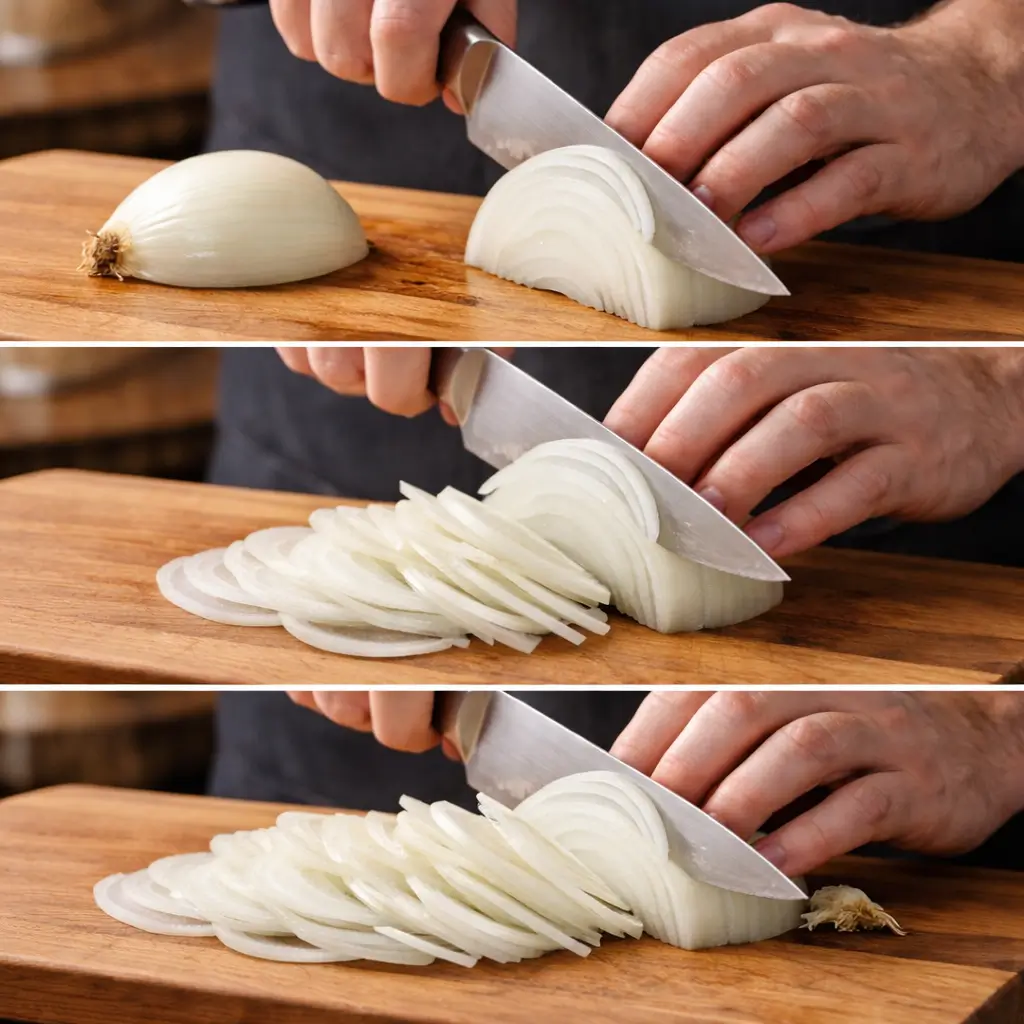
Start with your onion halved and placed flat side down on the cutting board. This stable base is essential for safety and accuracy.
Make sure the root end is facing away from your dominant hand. This allows you to slice toward the root while keeping the layers intact for as long as possible.
Hold the onion gently but firmly with your non cutting hand. Your fingertips should be curled inward, forming a guide for the knife. This grip helps maintain even spacing and protects your fingers.
Proper Knife Technique for Thin Slices
The way you move your knife plays a major role in mastering how to thinly slice an onion.
Use a smooth forward and downward motion rather than pressing straight down. Let the blade glide through the onion instead of forcing it. This creates cleaner cuts and prevents crushing the layers.
Keep the tip of the knife close to the board as you slice. Many cooks use a slight rocking motion, which improves control and rhythm.
Each slice should be as thin as possible while remaining consistent. Aim for nearly translucent pieces, especially if you plan to use the onion raw or in delicate dishes.
Maintaining Even Thickness
Consistency is what separates average slicing from professional level results.
Focus on spacing each cut evenly. One effective technique is to use your guiding hand to move back slightly after each slice, keeping a steady rhythm.
Avoid rushing. Speed will naturally improve over time, but precision should always come first. Uneven slices cook at different rates, which can affect the overall texture of your dish.
If you notice your slices becoming thicker, pause and reset your position. Small adjustments make a big difference.
What to Do When You Reach the Root
As you continue slicing, you will eventually reach the root end. This part holds the onion together, making it slightly more difficult to cut.
At this stage, you can either discard the root or turn it flat side down and continue slicing carefully. Some cooks prefer to make a small angled cut around the root to remove it cleanly.
Do not force the knife through this section. Controlled, gentle movements will keep your slices neat and prevent slipping.
Adjusting Technique for Different Recipes
Knowing how to thinly slice an onion also means adapting your technique based on how the onion will be used.
For raw dishes like salads or sandwiches, aim for extremely thin slices. These blend better with other ingredients and are less overpowering.
For cooking methods like sautéing or caramelizing, slightly thicker slices are acceptable, but uniformity still matters.
For dishes that require presentation, such as garnishes or plated meals, focus on creating smooth, even arcs that look as good as they taste.
Mastering this step by step process will transform the way you handle onions in the kitchen. With practice, your cuts will become faster, more precise, and more consistent.
Tips to Slice Onions Thinly Without Tears
Learning how to thinly slice an onion is not just about precision. It is also about making the process comfortable. One of the biggest frustrations people face is watery eyes caused by the natural compounds released when cutting into an onion. The good news is that a few simple techniques can significantly reduce this reaction.
Why Onions Make You Cry
When you cut into an onion, it releases a gas that reacts with the moisture in your eyes. This creates a mild acidic sensation, which triggers tearing as a protective response. The thinner and cleaner your cuts, the less damage you cause to the onion cells, which can help reduce the intensity of this effect.
Understanding this reaction is important because it explains why proper technique plays a role in minimizing tears while practicing how to thinly slice an onion.
Chill the Onion Before Slicing
One of the easiest ways to reduce tearing is to place the onion in the refrigerator for about 20 to 30 minutes before cutting.
Cold temperatures slow down the release of the compounds responsible for irritation. This makes the slicing process much more comfortable without affecting the flavor or texture of the onion.
Use a Sharp Knife for Cleaner Cuts
A sharp knife does more than improve precision. It also reduces the amount of gas released during slicing.
When a blade is dull, it crushes the onion instead of slicing through it cleanly. This causes more cell damage and releases more irritants into the air. Keeping your knife sharp is a simple but powerful way to make learning how to thinly slice an onion easier on your eyes.
Improve Airflow in Your Kitchen
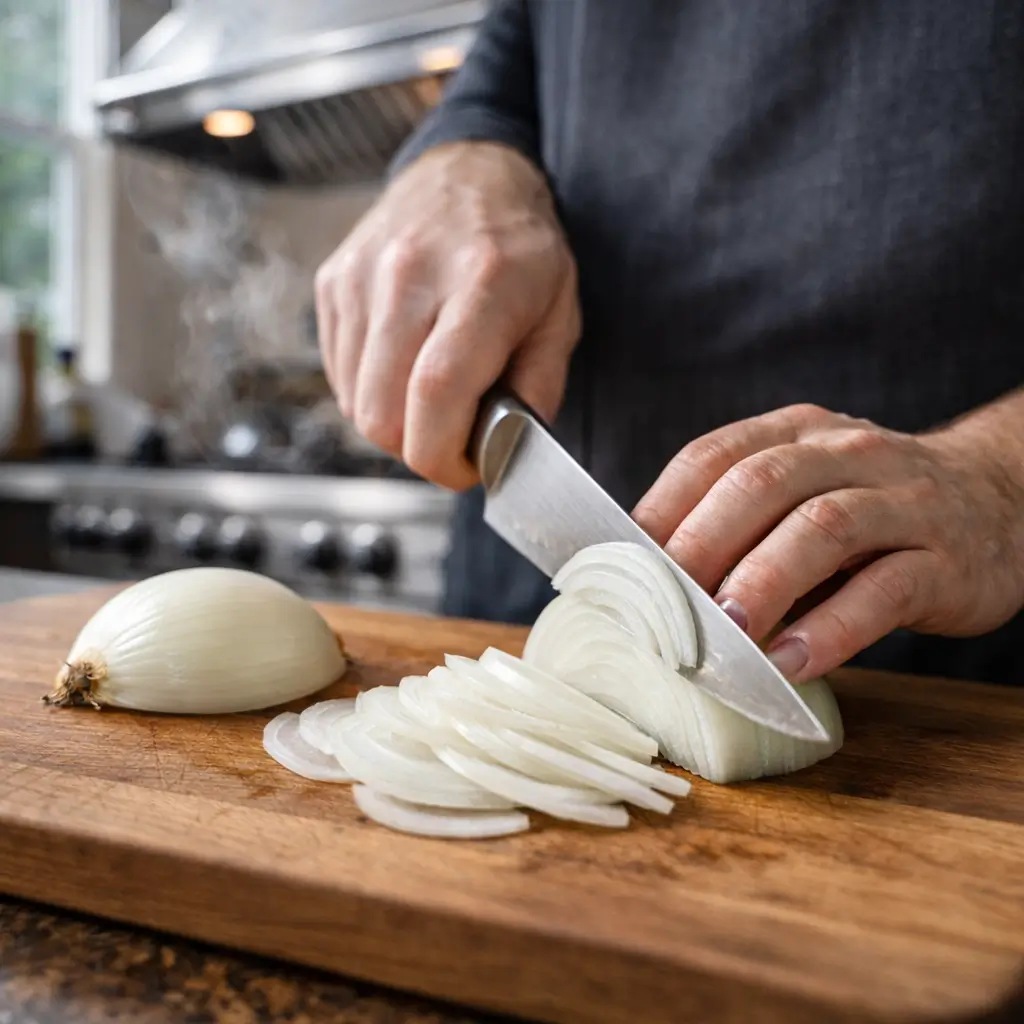
Good ventilation can help carry away the irritating compounds before they reach your eyes.
Turning on a kitchen fan or opening a window can make a noticeable difference. Even positioning yourself so that airflow moves the fumes away from your face can reduce discomfort.
Some people also slice onions near a running vent or fan to keep the air moving consistently.
Try Simple Home Techniques
There are a few practical tricks that many home cooks use when learning how to thinly slice an onion.
Cutting near a small stream of running water can help wash away some of the released compounds. Others prefer to light a nearby candle, as the flame may help burn off some of the gas in the air.
Wearing basic kitchen goggles is another option, especially if you are particularly sensitive. While it may feel unusual at first, it is very effective.
Work Efficiently Without Rushing
The longer you spend cutting an onion, the more exposure you have to the irritants. However, speed should not come at the expense of safety or precision.
Develop a steady rhythm that allows you to slice efficiently while maintaining control. As your skills improve, you will naturally become faster, reducing both prep time and discomfort.
Keep the Root Intact as Long as Possible
The root end contains a higher concentration of the compounds that cause tearing. By leaving it intact until the final cuts, you limit how much of these compounds are released during the slicing process.
This small adjustment can make a noticeable difference, especially when combined with other techniques.
Mastering these tips will make the process of how to thinly slice an onion far more enjoyable. With less irritation and more control, you can focus on achieving clean, even slices every time.
Common Mistakes to Avoid When Learning How to Thinly Slice an Onion
Even with the right tools and a clear method, small mistakes can hold you back from mastering how to thinly slice an onion. Identifying and correcting these habits will dramatically improve both your results and your confidence in the kitchen.
Cutting Too Fast Too Soon
One of the most common mistakes is rushing the process. Many beginners try to move quickly before they have developed proper control.
Speed without accuracy leads to uneven slices and increases the risk of slipping. Thin slicing is about precision and consistency. As your technique improves, speed will follow naturally.
Using the Wrong Knife or a Dull Blade
A dull knife is one of the biggest obstacles when learning how to thinly slice an onion. Instead of clean cuts, it crushes the onion layers, making slices uneven and releasing more irritating compounds.
Using a high quality, sharp knife allows you to glide through the onion smoothly. This improves both the appearance and texture of your slices.
Ignoring Proper Hand Position
Your guiding hand plays a critical role in maintaining control. Keeping your fingers flat or extended increases the risk of injury and makes it harder to achieve even slices.
Always curl your fingers inward and use your knuckles as a guide for the blade. This technique helps maintain consistent spacing and keeps your fingers safe.
Not Stabilizing the Onion
Trying to slice a whole onion without creating a flat base is a major mistake. The onion can roll or shift, making it difficult to control your cuts.
Always cut the onion in half and place the flat side down on the cutting board. This simple step provides the stability needed for precise slicing.
Removing the Root Too Early
The root end holds the onion together while you slice. Removing it too soon causes the layers to separate, making it harder to maintain uniform slices.
Keep the root intact until the final cuts. This helps you achieve cleaner, more controlled results.
Inconsistent Slice Thickness
Thin slicing requires attention to detail. If your cuts vary in thickness, the onion will cook unevenly and affect the overall texture of your dish.
Focus on maintaining steady spacing between each slice. It is better to go slowly and stay consistent than to rush and lose precision.
Poor Cutting Motion
Pressing straight down with the knife instead of using a smooth slicing motion can damage the onion and lead to rough edges.
A gentle forward and downward motion allows the blade to move naturally through the onion. This creates clean, even slices and reduces strain on your hand.
Skipping Practice
Like any kitchen skill, learning how to thinly slice an onion takes practice. Expecting perfect results on the first try can lead to frustration.
Set aside time to practice regularly. Even a few minutes of focused effort can quickly improve your technique and confidence.
Avoiding these common mistakes will help you refine your skills and achieve professional level results at home. With consistency and attention to detail, thinly slicing an onion will become second nature.
Creative Ways to Use Thinly Sliced Onions in Everyday Cooking
Once you have mastered how to thinly slice an onion, the next step is putting that skill to good use. Thin slices are incredibly versatile and can transform simple meals into something far more flavorful and visually appealing. From raw applications to slow cooked dishes, the way you use thinly sliced onions can enhance both taste and texture.
Using Thinly Sliced Onions in Fresh Dishes
Thin onions shine in recipes where they are served raw. Their delicate texture blends easily with other ingredients, allowing the flavor to complement rather than overpower.
In salads, thin slices add a crisp bite without being too harsh. Pair them with greens, citrus, or creamy dressings to balance their natural sharpness.
For sandwiches and burgers, thinly sliced onions provide just the right amount of crunch and flavor. Because they are sliced so finely, they layer well without making the sandwich bulky or difficult to eat.
You can also use them as a topping for tacos, wraps, or grain bowls. Their light texture makes them easy to distribute evenly across each bite.
Perfecting Caramelized Onions
Thin slicing is especially important when making caramelized onions. Uniform slices ensure even cooking, allowing the natural sugars to develop slowly.
Cook the onions over medium to low heat with a bit of oil or butter. Stir occasionally and allow them to soften gradually. Thin slices break down more evenly, resulting in a rich, golden color and deep flavor.
Caramelized onions are perfect for topping burgers, mixing into pasta, or serving alongside roasted meats and vegetables.
Enhancing Stir Fries and Sauteed Dishes
When cooking at higher heat, thinly sliced onions cook quickly and evenly. This makes them ideal for stir fries and sautéed recipes.
Because they are cut thin, they soften without becoming mushy. They also absorb sauces more effectively, helping distribute flavor throughout the dish.
Add them early in the cooking process for a softer texture or later for a slight crunch, depending on your preference.
Quick Pickled Onions for Bold Flavor
Thinly sliced onions are perfect for quick pickling. Their delicate structure allows them to absorb vinegar and seasonings rapidly.
Combine vinegar, water, a pinch of sugar, and salt, then pour the mixture over your sliced onions. Let them sit for at least 30 minutes. The result is a tangy, slightly sweet topping that adds brightness to many dishes.
Use pickled onions on tacos, sandwiches, salads, or grilled meats to create a balanced and vibrant flavor profile.
Adding Depth to Soups and Sauces
Thinly sliced onions dissolve more easily into soups and sauces, creating a smooth, cohesive base.
When cooked slowly, they release their natural sweetness and blend seamlessly into the dish. This is especially useful for recipes that rely on layered flavors, such as stews or pasta sauces.
Because the slices are thin, they require less cooking time, making them a practical choice for both quick meals and long simmering recipes.
Presentation and Plating Benefits
Thin slices do not just improve flavor. They also enhance presentation. Their uniform shape creates a clean, professional look that elevates the overall appearance of a dish.
Whether used as a garnish or a main ingredient, evenly sliced onions show attention to detail and care in preparation.
Mastering how to thinly slice an onion opens the door to countless cooking possibilities. It is a simple skill that delivers noticeable improvements in both everyday meals and more refined dishes.
Final Thoughts on How to Thinly Slice an Onion Like a Pro
Mastering how to thinly slice an onion is one of the most practical skills you can develop in the kitchen. While it may seem simple at first, refining your technique has a direct impact on flavor, texture, and presentation across a wide range of dishes. From fresh salads to slow cooked meals, knowing exactly how to thinly slice an onion gives you greater control and confidence every time you cook.
Building Consistency With Practice
The key to improving how to thinly slice an onion is repetition with intention. Each time you slice an onion, focus on maintaining even thickness and smooth knife movement. Over time, your hands will develop muscle memory, allowing you to thinly slice an onion quickly without sacrificing precision.
Consistency matters more than speed. A perfectly thin slice does not need to be rushed. As your technique improves, you will naturally become faster while still maintaining clean, uniform results.
Why This Skill Improves Every Dish
Understanding how to thinly slice an onion helps you achieve better cooking outcomes. Thin slices cook evenly, absorb flavors more effectively, and blend seamlessly into recipes. Whether you are sautéing, caramelizing, or serving onions raw, knowing how to thinly slice an onion ensures balanced flavor in every bite.
This technique also improves presentation. Even slices create a polished, professional look that enhances the overall dining experience. It is a small detail that makes a noticeable difference.
Making It Part of Your Routine
The more often you practice how to thinly slice an onion, the more natural it becomes. Try incorporating this skill into your daily cooking routine, even in simple meals. Each opportunity to thinly slice an onion reinforces your technique and builds confidence.
You do not need special equipment or advanced training. With a sharp knife, proper preparation, and attention to detail, anyone can learn how to thinly slice an onion effectively.
Final Encouragement
If you have struggled in the past, do not be discouraged. Learning how to thinly slice an onion takes time, but the progress is quick once you focus on the fundamentals. Small improvements lead to noticeable results, and before long, thinly slicing an onion will feel effortless.
By committing to proper technique and consistent practice, you will master how to thinly slice an onion and elevate your cooking in ways that go far beyond this single skill.
Frequently Asked Questions About How to Thinly Slice an Onion
How thin should onion slices be?
For most recipes, slices should be thin enough to appear slightly translucent. This allows them to cook evenly and blend well with other ingredients.
What is the best knife for how to thinly slice an onion?
A sharp chef’s knife is the best choice. It provides control, precision, and clean cuts, which are essential when learning how to thinly slice an onion.
How do I keep onions from sliding while slicing?
Always cut the onion in half and place the flat side down on the cutting board. This creates stability and makes it easier to thinly slice an onion safely.
Can I use a mandoline for thin onion slices?
Yes, a mandoline can produce very thin, even slices quickly. However, it requires careful handling and proper safety precautions.
How do I store thinly sliced onions?
Place them in an airtight container and refrigerate. They are best used within one to two days for optimal freshness and flavor.